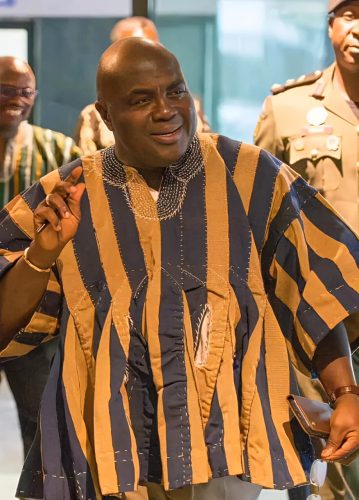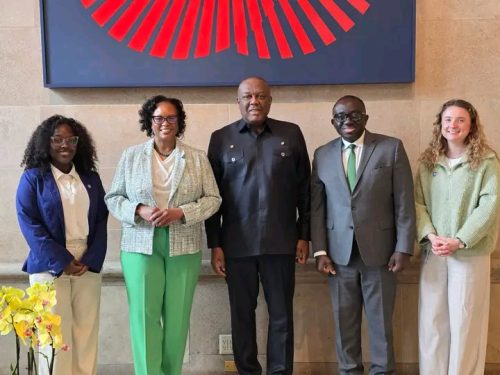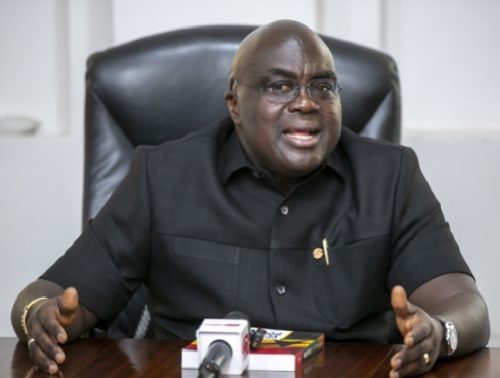


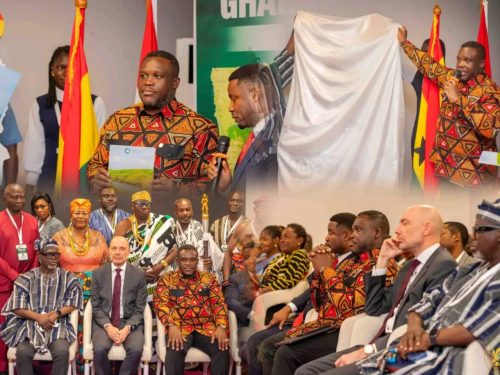
The Minister for Communication, Digital Technology and Innovations, Hon. Samuel Nartey George (MP), has officially launched the Ghana Climate Atlas, a high-resolution digital tool designed to place climate data at the heart of government policy and investment decisions.
He described the Atlas as a “scientific compass” that will guide Ghana’s economic recovery efforts while strengthening long-term climate resilience.
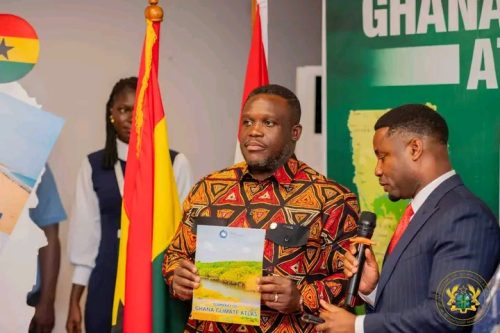
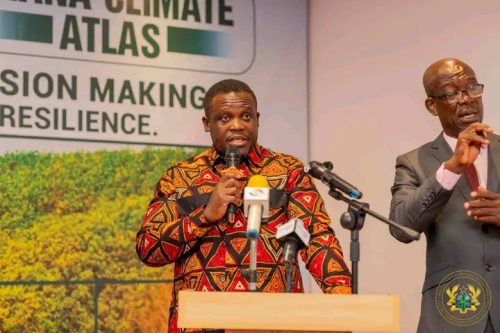
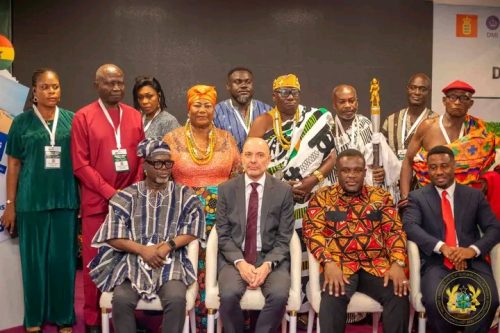
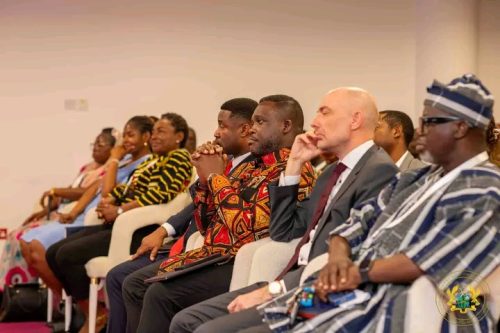
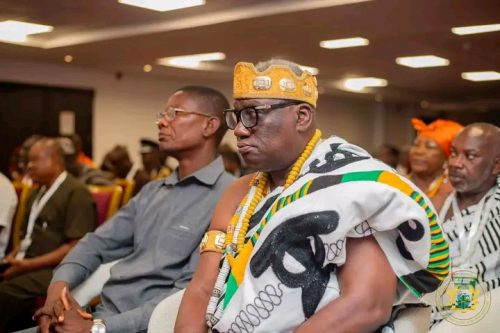
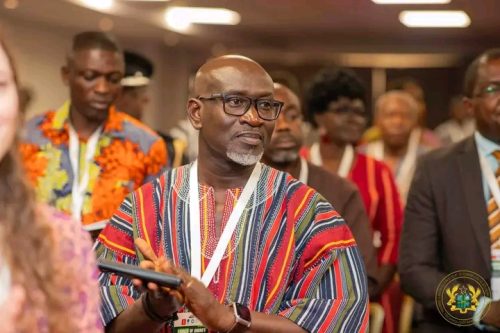
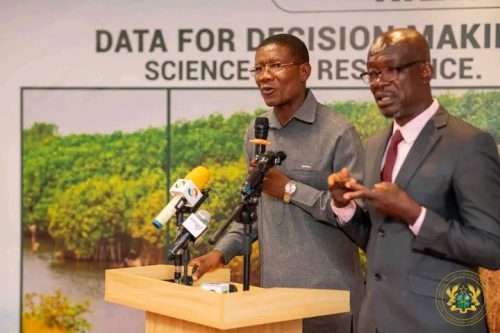
Speaking at the launch today, Wednesday 25the March 2026 at the Accra City Hotel, he called on all government ministries, the private sector, and the media to adopt the Atlas as a mandatory reference for planning and investment. “Climate information is no longer a luxury for scientific research. It is now a fundamental tool for development planning, economic management, and national resilience”.
Hon. Nartey George explained that, the Atlas, developed by the Ghana Meteorological Agency (GMet) in partnership with the Danish Meteorological Institute (DMI), uses high-resolution climate projections at a four-kilometre scale — a significant advance on the broad regional models previously available to planners. The tool provides localised data on rainfall patterns, flood risk, drought vulnerability, and temperature trends out to 2050 and beyond.
The Minister linked the event directly to the President John Mahama’s remarks in the 2026 State of the Nation Address, in which the President warned of the “unforgiving impact of climate change on the national economy,” citing threats to food security and hydropower generation at the Akosombo Dam. “Today, we answer that call,” the minister said.
The Atlas, he said, would serve as a mandatory reference point for all Ministries, Departments, and Agencies when formulating national development plans and local assembly budgets. Engineers designing road and bridge infrastructure must account for projected flood conditions, while energy planners will use it to assess hydropower and renewable energy investments.
The Minister also highlighted the Atlas as a tool for gender equity, noting that climate change disproportionately affects women in rural agriculture and the informal sector, hence, localised data will allow the government to design targeted support for women-led green businesses and climate-smart farming.
On the international stage, the minister said the Atlas strengthens Ghana’s position within the United Nations Framework Convention on Climate Change (UNFCCC) Paris Agreement framework by providing the scientific evidence base required by bodies such as the Green Climate Fund. “We are demonstrating that we have the scientific rigour to use that finance effectively,” the Minister said.


Enock Akonnor is an experienced Ghanaian journalist, based in Kumasi and currently serves as the CEO and Managing Editor of www.leakyghana.com.
With a wealth of expertise built over many years in the media industry, he has earned a solid reputation as one of Ghana’s most sought-after journalists.
Contact:
📞 +233 541 921 562
✉️ enockakonnor2013@gmail.com