

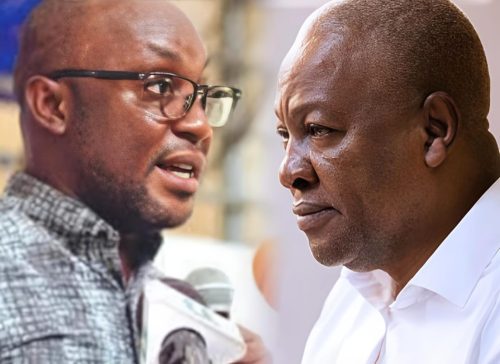
Abuakwa South MP and member of Parliament’s Health Committee, Dr. Kingsley Agyemang, has criticised President John Mahama over remarks made during the 2026 State of the Nation Address, arguing that the President’s own words reflect the depth of Ghana’s economic challenges rather than signs of stability.
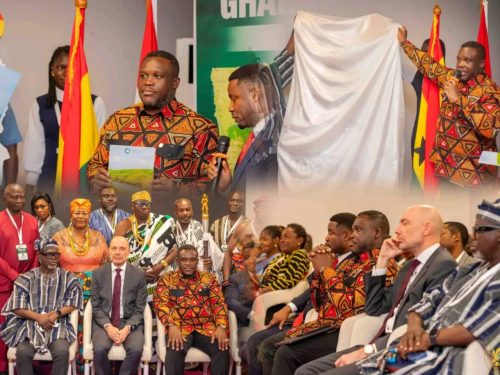
Delivering his address to Parliament, President Mahama urged Ghanaians to “fasten their seatbelts” as his administration pushes ahead with economic reforms aimed at stabilising and transforming the economy.


He acknowledged that structural adjustments may bring short-term discomfort but insisted they are necessary for long-term growth and national renewal.

The President reaffirmed his government’s commitment to job creation, fiscal discipline, energy sector reforms and the operationalisation of the much-publicised 24-hour economy policy.

However, Dr. Agyemang contends that the seatbelt metaphor conveys a stark warning to citizens already under financial strain.

“When a President tells citizens to fasten their seatbelts, it suggests we are in turbulent times, not stability,” he stated.
“Rising unemployment, cocoa price cuts, rapid ECG credit depletion, traders protesting 20 per cent VAT and persistent hardship show that after one year in office, the NDC has yet to deliver real relief to Ghanaians.”
According to the legislator, leadership communication often reflects underlying realities. He argued that while the President projected optimism about economic recovery and structural reforms, many households and businesses continue to experience economic pressure.
Dr. Agyemang cited growing frustration among cocoa farmers over price adjustments and mounting complaints from electricity consumers about the rapid and unexplained depletion of prepaid ECG credits.
Reports of flickering lights in several communities and a directive by the Ministry of Energy and Green Transition ordering investigations into widespread prepaid credit concerns have further heightened public anxiety about the stability of the power sector.
He questioned the feasibility of implementing an ambitious 24-hour economy under such conditions, stressing that businesses require reliable and consistent power supply to operate effectively.
“A 24-hour economy cannot thrive where there is uncertainty about electricity and rising operational costs,” he implied.
Beyond the energy sector, the MP pointed to protests by sections of the trading community over the implementation of the 20 per cent VAT policy, describing the demonstrations as evidence of mounting strain within the informal and small-scale business sector.
While acknowledging that economic reform often demands difficult decisions, he maintained that such policies must be accompanied by visible relief measures to cushion citizens from immediate shocks.
Youth unemployment, he added, remains a pressing national concern. Assurances of job creation, he argued, must translate into tangible and accessible opportunities rather than remain parliamentary rhetoric.
While conceding that economic recovery is rarely instantaneous, Dr. Agyemang emphasised that governance must ultimately be measured by results, not projections.
“When the President tells the nation to fasten their seatbelts, Ghanaians understand what that means. It means the turbulence is real.
The question is whether this administration can move beyond rhetoric and deliver the stability and relief the people were promised,” he concluded.

Enock Akonnor is an experienced Ghanaian journalist, based in Kumasi and currently serves as the CEO and Managing Editor of www.leakyghana.com.
With a wealth of expertise built over many years in the media industry, he has earned a solid reputation as one of Ghana’s most sought-after journalists.
Contact:
📞 +233 541 921 562
✉️ enockakonnor2013@gmail.com