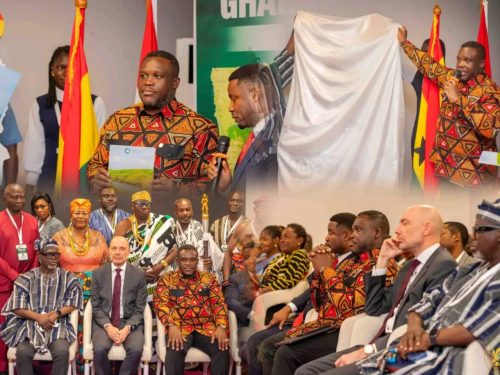


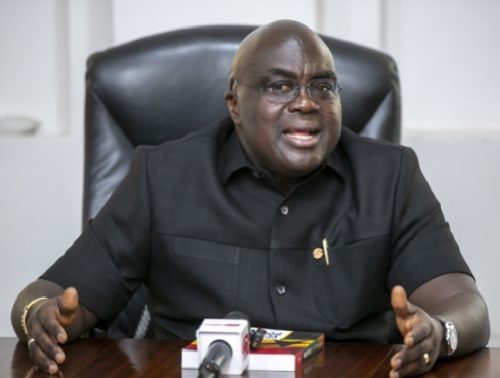
Ghana’s Chief of Staff, Julius Debrah, has called for stronger collaboration among West African governments, private sector actors and development partners to address trade barriers and unlock the region’s economic potential.
Speaking at a two-day summit organised by the Federation of African Chambers of Commerce and Industry, Mr Debrah noted that despite existing policy frameworks across the sub-region, several structural challenges continue to hinder intra-regional trade.


He cited poor logistics and transport infrastructure, fragmented regulatory systems, limited access to finance for small and medium-sized enterprises (SMEs), high trade costs and persistent delays at ports and along trade corridors as major constraints.

He stressed that governments alone cannot drive the transformation needed to resolve these issues, urging business associations such as the Association of Ghana Industries and the Ghana National Chamber of Commerce and Industry to take a leading role in advocacy, investment mobilisation and enterprise development.

“Let us build robust systems, develop a new trade architecture and renew our commitment to competing effectively across Africa and globally,” he said, adding that collective efforts could transform West Africa into “a dynamic, integrated and prosperous economic region.”

The summit, held under the theme “Unlocking West Africa’s economic potential through trade, investment, logistics and youth empowerment,” brought together sector ministers, development partners, academics and youth entrepreneurs.
Mr Debrah also underscored the importance of infrastructure, noting that without efficient trade corridors, reliable road networks and digital trade platforms, economies in the region would struggle to compete.
He further highlighted the need to harness Africa’s youthful population through targeted entrepreneurship, innovation and inclusion programmes.
Adding to the discussion, David Ofosu-Dorte of AB and David Africa called on policymakers to confront the historical roots of Africa’s fragmented trade systems, tracing them back to the Berlin Conference.
He urged a reassessment of trade rules that limit intra-African commerce and emphasised the importance of engaging the private sector in shaping effective policies.
President of the federation, Faman Touré, stressed that regional integration must be reflected in real economic activity, from factories and ports to markets.
He called for stronger alignment between public policy and private investment, as well as between regional ambitions and national implementation.
Mr Touré noted that the federation is undergoing a strategic transformation to reposition itself as a platform for regional business mobilisation and a driver of private-sector-led initiatives.
For his part, President of the Ghana National Chamber of Commerce and Industry, Stephane Miezan, emphasised the need for countries in the sub-region to rethink their approach to trade and development to build a more resilient and self-sustaining regional economy.
The summit concluded with a shared commitment among stakeholders to deepen cooperation and implement reforms aimed at unlocking West Africa’s vast economic potential.

Enock Akonnor is an experienced Ghanaian journalist, based in Kumasi and currently serves as the CEO and Managing Editor of www.leakyghana.com.
With a wealth of expertise built over many years in the media industry, he has earned a solid reputation as one of Ghana’s most sought-after journalists.
Contact:
📞 +233 541 921 562
✉️ enockakonnor2013@gmail.com