

By Enock Akonnor (Managing Editor)
Cultural practices rooted in discrimination are stripping Persons With Disabilities of their basic human rights in parts of Ghana, with the Ashanti Region emerging as the most affected, according to a new report by the ABAK Foundation.


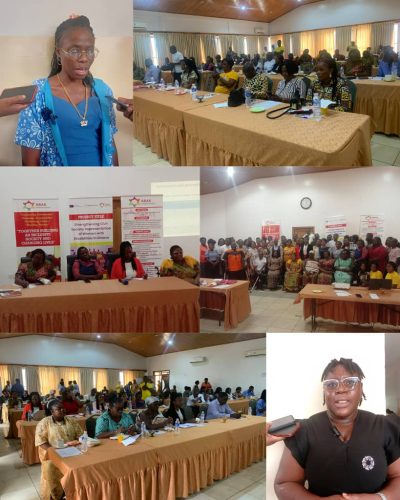
The findings, presented at a recent advocacy workshop held in Kumasi on 1st September, 2025 at Miklin Hotel, paint a troubling picture.

According to the report, individuals with disabilities especially women in rural areas are being hidden away by their families, denied access to public spaces, and excluded from decision-making processes out of fear of stigmatization and punitive traditional norms.

Rather than being protected and empowered, many Persons With Disabilities are instead isolated by the very communities meant to support them.

“In some communities, it’s still taboo for a person with a disability to be seen near a chief’s palace or to have a voice in communal matters,” said Dorcas Dapaah, Project Officer at ABAK Foundation.
“Families hide their relatives not because they want to but because they fear what their culture will do to them.”
The revelations come under the umbrella of a two-year European Union-funded project titled “Strengthening Civil Society Representation of Women with Disabilities in Ghana,” jointly implemented by ABAK Foundation and Sightsavers Ireland.
A Call for Policy Reform
The research covered the Ashanti, Greater Accra, Bono, and Bono East regions, goes beyond data collection.
It serves as a call to action for government, traditional leaders, and civil society to dismantle systemic and cultural barriers that continue to marginalize Persons With Disabilities.
Per the report, key among the challenges faced by women with disabilities are:
- Social exclusion and the fear of public shame
- Inaccessibility of public infrastructure
- Limited education opportunities
- Staggering unemployment rates among women with disabilities
- Barriers to financial and social services
Paulina Afognuo Agyei, a visually impaired advocate and Gender and Social Inclusion Officer at ABAK Foundation, highlighted the daily struggles faced by Persons With Disabilities.
“We’re not asking for special treatment. We’re asking for equal rights. It is not enough to pass laws. We need enforcement. We need buildings we can enter, jobs we can apply for, and policies that include us,” she said passionately.
She emphasized the need for government-backed vocational training and entrepreneurship programs tailored to the needs of Persons With Disabilities, especially women.
Challenging Tradition: The Role of Chiefs and Community Leaders
ABAK Foundation is calling on traditional authorities to lead the charge in changing community attitudes.
“Culture evolves. If our customs are hurting people, then it’s time to re-evaluate them,” said Ms. Dapaah.
“Traditional leaders must become allies in the fight for inclusion, not obstacles.”
She added that many Persons With Disabilities have untapped talents and skills that can greatly contribute to community development if only given the chance.
Building Inclusive Advocacy Networks
The workshop also served as a platform to strengthen ties between disability-focused civil society organizations, climate advocacy groups, and women’s rights networks.
Discussions focused on mainstreaming disability rights into broader development issues such as climate resilience, education, and economic empowerment.
The Bigger Picture
While the Ashanti Region’s situation is particularly severe, the report makes it clear that discrimination against Persons With Disabilities is a national issue.
The project aims to strengthen grassroots advocacy so that disability rights are treated as fundamental human rights not optional accommodations.
With the momentum from this research and ongoing training efforts, ABAK Foundation and its partners hope to influence policy reform, increase visibility for women with disabilities, and build inclusive systems that leave no one behind.
Source; www.leakyghana.com

Enock Akonnor is an experienced Ghanaian journalist, based in Kumasi and currently serves as the CEO and Managing Editor of www.leakyghana.com.
With a wealth of expertise built over many years in the media industry, he has earned a solid reputation as one of Ghana’s most sought-after journalists.
Contact:
📞 +233 541 921 562
✉️ enockakonnor2013@gmail.com