

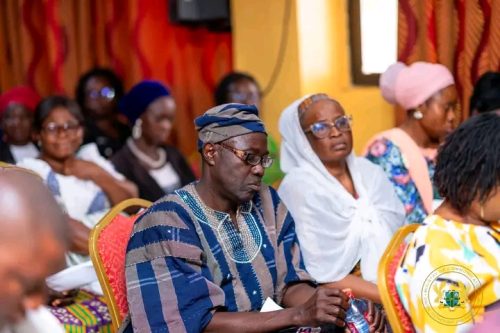
The Ministry of Communication, Digital Technology and Innovations (MOCDTI), in collaboration with the Ghana Investment Fund for Electronic Communications (GIFEC) and the Ghana-India Kofi Annan Centre of Excellence in ICT (GI-KACE), has held an inception meeting with stakeholders in the Upper West Region ahead of the 2025 National Girls-in-ICT celebration.
The meeting brought together key stakeholders, including officials of the Upper West Regional Coordinating Council, the Regional Directorate of Education, Girl Child Education Officers, Municipal and District Chief Executives (MMDCEs), and Directors of Education from all eleven (11) districts of the region.
Government’s Commitment to Digital Inclusion
Speaking on behalf of the Minister for Communication, Digital Technology and Innovations, Hon. Samuel Nartey George (MP), the Chief Director, Mr. Alexander Yaw Arphul emphasized government’s strong commitment to bridging the gender digital divide through the provision of ICT skills to young girls.
He highlighted that the Girls-in-ICT initiative is part of the Ministry’s broader digital empowerment agenda, which includes flagship programmes such as the One Million Coders initiative.
Mr. Arphul explained that the programme, which is inspired by the International Telecommunication Union’s (ITU) global Girls-in-ICT Day, has become a platform for Ghana to advance inclusive digital transformation by providing girls with access to technical training, mentorship and exposure to ICT career opportunities.
“Between 2023 and 2024 alone, 5,000 girls were trained across five regions. This year, our target is to train 3,000 girls in the Volta, Upper West and Savannah Regions, with 1,000 beneficiaries expected from the Upper West Region,” he stated.
*Regional Support and SDG Alignment*
The Upper West Regional Minister, Hon. Charles Lwanga Puozuing Esq., in remarks delivered on his behalf, expressed appreciation to the Ministry for selecting the region as one of the hosts for this year’s celebration.
He stressed that the initiative directly supports Sustainable Development Goals (SDGs) 4 and 5, which focus on Quality Education and Gender Equality. “A digital economy that excludes women is incomplete and unsustainable. But a digital economy that empowers girls and young women secures prosperity for all,” he noted, while urging stakeholders—including MMDCEs, parents, educators, traditional leaders, civil society, and the private sector—to collaborate in creating a safe and enabling environment for girls in ICT.
*Stakeholder Roles and Preparations*
Mr. Austin Hesse, Director of Policy, Planning, Budgeting, Monitoring and Evaluation at MOCDTI, delivered a comprehensive presentation on the roadmap for implementation. He outlined the different phases of the programme—training, mentorship, capacity-building for teachers, and climax activities—emphasizing that each stage is critical to ensuring lasting impact.
He further highlighted the responsibilities of the Upper West RCC, Ghana Education Service (GES), and ICT trainers. The RCC’s leadership, he explained, would be vital in mobilizing district-level support, while the GES would identify eligible participants and facilitate teacher involvement. Preparatory activities, including venue inspections, accommodation arrangements, and mentorship session planning, were also flagged as key to creating a safe and supportive learning environment.
On his part, the Director of Operations at GIFEC, Mr. Yahaya Zakaria Osman, also addressed the meeting, stressing GIFEC’s mandate to extend ICT infrastructure and services to underserved communities. He explained that initiatives such as the Rural Telephony Project, which has connected many remote areas, directly support digital inclusion and by extension, the Girls-in-ICT programme.
Mr. Osman noted that GIFEC provides essential logistics, laptops, and reliable internet connectivity for training and mentorship sessions. In addition, the Fund motivates excellence by awarding laptops to top-performing girls and establishing fully equipped computer laboratories for the best ten participants. These interventions, he added, not only sustain the impact of the programme but also create long-term community resources that benefit schools and peers.
This year’s celebration, under the theme “Girls in ICT for Inclusive Digital Transformation”, will also include capacity-building sessions for teachers to strengthen digital literacy instruction in classrooms.

Enock Akonnor is an experienced Ghanaian journalist, based in Kumasi and currently serves as the CEO and Managing Editor of www.leakyghana.com.


With a wealth of expertise built over many years in the media industry, he has earned a solid reputation as one of Ghana’s most sought-after journalists.

Contact:
📞 +233 541 921 562
✉️ enockakonnor2013@gmail.com